
Every city has its invisible population — not the commuters or the shopkeepers, but the millions of animals quietly surviving without a home. From the narrow streets of Bangkok to the suburban corners of Berlin, countless cats and dogs wander in search of shelter, food, or a glimpse of kindness. A recent global study has revealed a sobering truth: nearly one in three companion animals across major nations are homeless.
This is not merely an issue of abandoned pets — it is a mirror reflecting how human lifestyles, housing policies, and urban systems have left our oldest companions behind.
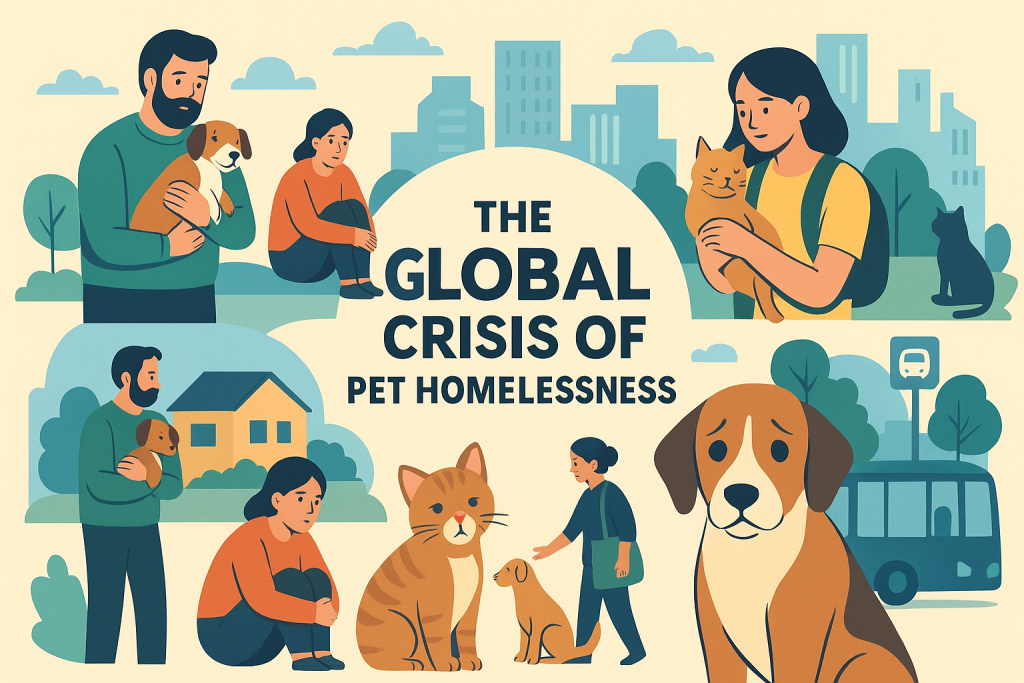
1. A Modern Tragedy Hidden in Plain Sight
More than 360 million cats and dogs live without a stable home. Some roam the streets; others wait endlessly in crowded shelters. In every country studied, there is a common thread: too many animals, too few homes, and far too little understanding of the systemic causes.
At the heart of this crisis lies a paradox — while pet ownership is at an all-time high, so is pet abandonment. Social media celebrates “pet parenthood” as a lifestyle, yet the realities of urban living — rising rents, restrictive landlords, and long working hours — make keeping an animal increasingly difficult.
2. When Housing Becomes a Barrier to Love
For many families, losing a pet is not a choice of the heart but a constraint of circumstance. Roughly one in five people who gave up their pets did so because they were forced to move into housing that forbade animals. In a world where flexible jobs and rental living dominate, policies that exclude pets are quietly creating millions of orphans.
If cities can be reimagined to include bicycle lanes, green spaces, and inclusive transport, why not “pet-inclusive housing” — designed to recognize animals as part of the family unit?
3. The Human Side of Pet Homelessness
Pet abandonment is rarely driven by cruelty; it often comes from exhaustion, illness, or lack of resources. Around 15% of pet owners globally admit they are considering rehoming their animal within a year. Health issues, financial pressure, time constraints, and behavioral challenges are cited as top reasons.
Behind each number lies a deeply human story — a worker who can’t afford veterinary care, an elderly owner who can no longer walk their dog, a family forced to relocate. Pet homelessness, therefore, is not just an animal welfare issue — it’s a social one.
4. The Reproduction Ripple Effect
Another invisible factor is unchecked breeding. Only about half of all cats and dogs are sterilized, leading to endless cycles of accidental litters. Each unplanned birth compounds the problem — one unneutered pair of cats, for example, can produce thousands of offspring in just a few years.
Without community-level education and accessible veterinary services, the effort to reduce stray populations will always be one step behind.
5. Toward a Compassionate Urban Future
The solution to pet homelessness is neither quick nor singular. It requires cooperation between governments, communities, and individuals. But it begins with a shift in mindset — viewing companion animals not as property, but as sentient citizens of our shared environment.
Imagine a world where:
- Cities provide tax incentives for landlords who allow pets.
- Public transport welcomes animals under basic guidelines.
- Veterinary care is subsidized for low-income families.
- Education campaigns teach empathy as much as responsibility.
When compassion becomes a civic value, the homeless pet will no longer be an inevitable fixture of the modern cityscape.
6. A Call to Responsibility
Each of us has a role to play — adopting instead of buying, supporting local shelters, or simply ensuring our pets are spayed, vaccinated, and microchipped. Small actions, multiplied by millions, can turn the tide.
The global pet homelessness crisis is a reminder that love, no matter how sincere, needs structure and support. A society that makes room for its animals — in homes, in cities, and in hearts — is one that truly understands coexistence.