
As city skylines grow taller and urban rhythms quicken, a new measure of civilization is quietly emerging — how friendly a society is to its pets. But a “pet-friendly society” is far more than dog parks or pet-themed cafés. It’s a reflection of empathy, inclusiveness, and how humans redefine coexistence with other living beings.
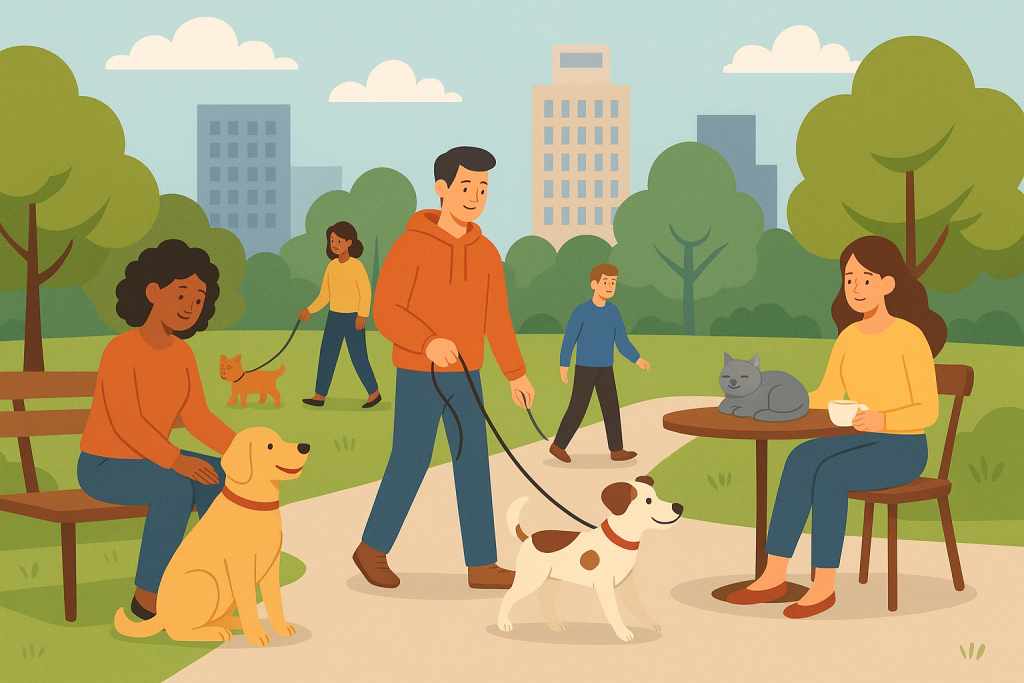
Pets Are Not Accessories, but Social Members
In the past, pets were treated as property — dogs chained in yards, cats confined indoors, birds caged for decoration. Today, we recognize that pets are part of the urban ecosystem.
In cities like Tokyo, Amsterdam, and Vancouver, pets can ride public transport, receive community healthcare, and even attend sessions with pet psychologists to ease anxiety. These examples show that the well-being of pets mirrors the emotional maturity of a society.
Pet-Friendly Doesn’t Mean “Pet Over People”
Being pet-friendly isn’t about letting animals do whatever they please.
True friendliness is balance through mutual respect.
Pet owners have responsibilities — cleaning up waste, reducing noise, ensuring vaccinations.
Communities must create systems — designated pet areas, clear pet etiquette codes.
Public spaces need thoughtful design — shifting from “no pets allowed” to “shared spaces for all.”
In some European cities, shopping malls feature shaded waiting areas with water stations for pets. In China, new residential communities are building “pet elevators” and “pet grooming zones.” These details normalize pet coexistence — not as a privilege, but as part of daily life.
Beyond Economy: From Consumption to Coexistence
The rise of pet-friendliness isn’t just a moral shift; it’s reshaping industries.
Pet insurance, rehabilitation, retirement homes, social apps — all are building an ecosystem centered on emotional coexistence.
Companies stuck at “selling products” are in the Pet Economy 1.0 stage;
those exploring how pets and humans live and feel together are moving toward true social innovation.
Some real estate developers now include shared pet courtyards; some cities plan “pet corridors” in public infrastructure. These ideas aren’t only business strategies — they signal respect for multi-species harmony.
From Policy to Culture: The Next Step
China now has over 100 million pets, yet true friendliness often depends on individual efforts, not institutional support.
To move forward, we need:
- A unified national pet registration and management system
- Pet-inclusive medical and insurance frameworks
- Education on animal ethics and coexistence awareness
Only when “caring for animals” becomes part of our cultural DNA can we build a truly pet-inclusive civilization.
Conclusion
A pet-friendly society doesn’t mean cities should bend to pets; it means cities should embrace all forms of life with compassion and design.
It reminds us that civilization isn’t measured by skyscrapers or GDP — but by whether every living being, human or animal, has a rightful place in our shared world.