
When it comes to choosing pet products, most owners focus on the visible features — color, shape, or price — but rarely consider what truly defines a pet’s comfort: the material itself. Behind every cozy bed, durable leash, or gentle grooming brush lies a world of material science that quietly shapes a pet’s health, mood, and long-term well-being.
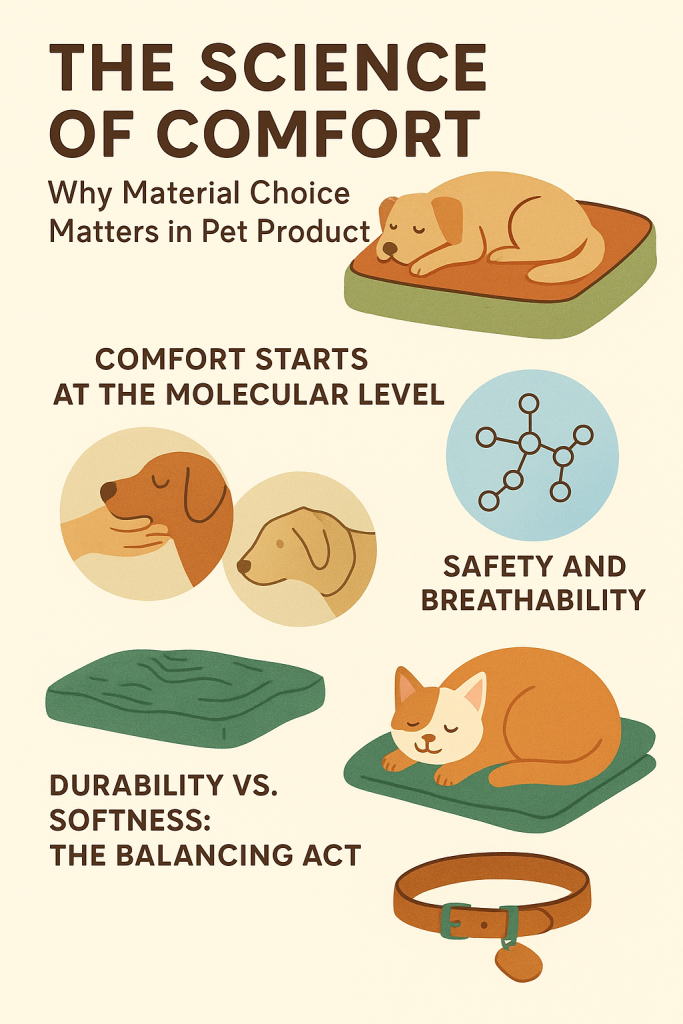
Comfort Starts at the Molecular Level
A pet’s skin and fur are far more sensitive than we think. Dogs and cats have nerve-dense skin that reacts quickly to temperature, friction, and texture. That means a material that feels “soft” to a human might feel irritating to a pet after prolonged contact. Natural fibers like cotton, linen, or bamboo tend to regulate temperature better and minimize static, while synthetic fabrics can trap heat and moisture — a hidden cause of itchiness or discomfort.
Safety and Breathability
In bedding and clothing, breathability is key. Materials that allow air circulation reduce bacterial buildup and prevent odors. For example, memory foam beds covered in breathable microfiber can support joints while keeping pets cool. In contrast, closed-cell foams or plastic coatings, often found in cheaper products, can cause overheating and skin irritation — especially for long-haired breeds.
Durability vs. Softness: The Balancing Act
Durability is another dimension of comfort. A leash that frays easily or a chew toy that breaks apart poses safety risks. High-tensile materials like woven nylon or reinforced hemp strike the right balance: tough yet flexible. The texture and give of a material influence how safe and enjoyable it feels during play or training.
Eco-Friendly Materials, Happier Pets
Interestingly, sustainable materials often turn out to be more pet-friendly. Recycled cotton, organic hemp, cork leather, and plant-based rubbers are not only gentler on the environment but also less likely to release harmful chemicals or microplastics. As the pet industry leans toward eco-conscious production, material innovation has become both an ethical and scientific pursuit.
The Emotional Side of Texture
Just like humans, pets form emotional associations with touch. A favorite blanket or toy isn’t random—it’s a sensory comfort object. Studies show that certain textures can lower stress in animals, much like weighted blankets calm humans. The right fabric, therefore, can become a subtle tool for emotional support.
In the End, Comfort Is Connection
Choosing the right material isn’t just about quality — it’s about empathy. It’s understanding how pets experience the world through their skin, paws, and noses. The next time you pick a bed, a collar, or even a feeding mat, think beyond the look. Feel the texture, check the breathability, and imagine it from your pet’s perspective. Because true comfort isn’t a luxury — it’s a form of love made tangible.