
Every pet has that one toy — the squeaky duck, the ragged rope, or the crinkly ball they refuse to part with. But have you ever wondered why that toy holds such magic? Understanding the psychology behind a pet’s favorite plaything can help you choose better toys — and strengthen your bond.
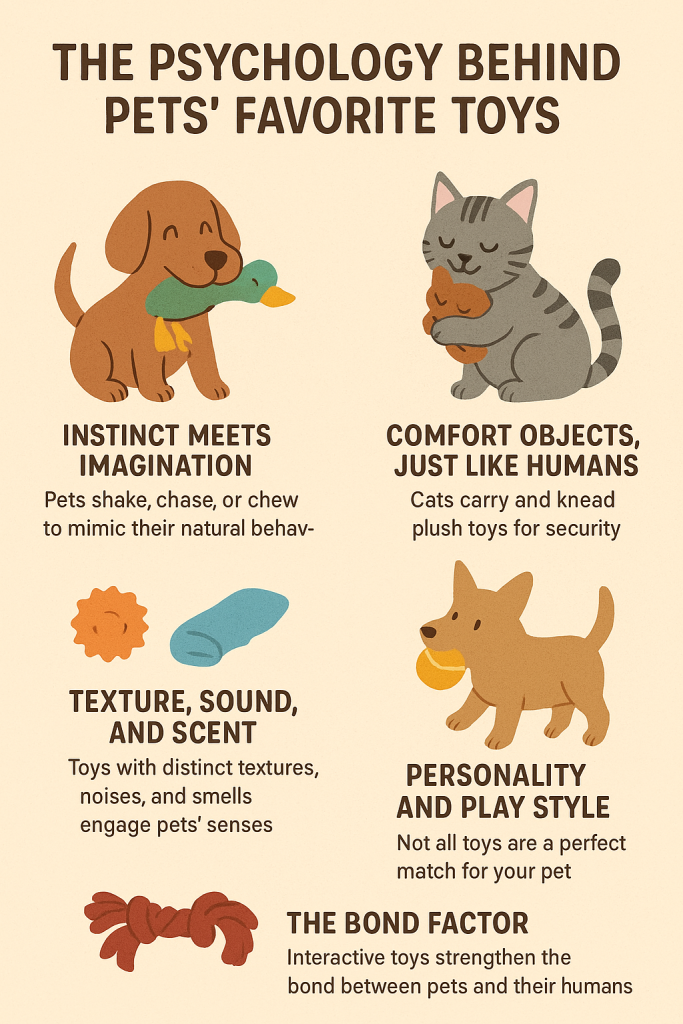
1. Instinct Meets Imagination
Play is more than fun — it’s instinctual. Dogs shake squeaky toys because it mimics catching prey, while cats chase feather wands as if they were hunting birds. Even when safe at home, these behaviors keep their primal instincts sharp and satisfy their natural curiosity.
2. Comfort Objects, Just Like Humans
Many pets see toys as emotional anchors. A puppy may cuddle a soft plush because it smells like you, giving them a sense of safety. Similarly, cats may knead and carry small toys, much like kittens interacting with their mother. These comfort behaviors reduce anxiety and create emotional security.
3. Texture, Sound, and Scent — the Hidden Triggers
Pets’ senses drive their preferences. Dogs tend to love toys that squeak, providing instant feedback and excitement. Cats often favor materials that crinkle or bounce unpredictably. Texture matters too — soft toys are for nurturing, while tougher ones invite chewing and challenge.
4. Personality and Play Style
Your pet’s personality influences their toy choices.
- The Hunter: loves chasing, stalking, and pouncing.
- The Problem-Solver: prefers puzzle toys that release treats.
- The Comfort-Seeker: always carries soft plush companions.
Matching toys to these archetypes keeps pets mentally stimulated and emotionally satisfied.
5. The Bond Factor
Toys also become symbols of shared joy. Tug-of-war ropes or fetch balls build trust through interactive play. When pets see their humans engaging, toys transform from mere objects to tools of connection — and that’s where true loyalty grows.
Conclusion
A toy isn’t just a distraction — it’s a window into your pet’s emotional world. By paying attention to what they choose and how they play, you’re not just keeping them entertained — you’re listening to their instincts, emotions, and personality.