
In the age of screens and sedentary lifestyles, fitness apps and wearable trackers have done their best to keep us moving. Yet, despite all the reminders, many users still struggle to maintain consistent exercise habits. The missing link might not be motivation — but connection. Enter the new era of virtual human-pet characters — digital companions designed not just to coach, but to care.
1. Beyond Gamification: Emotional Anchors in Motion
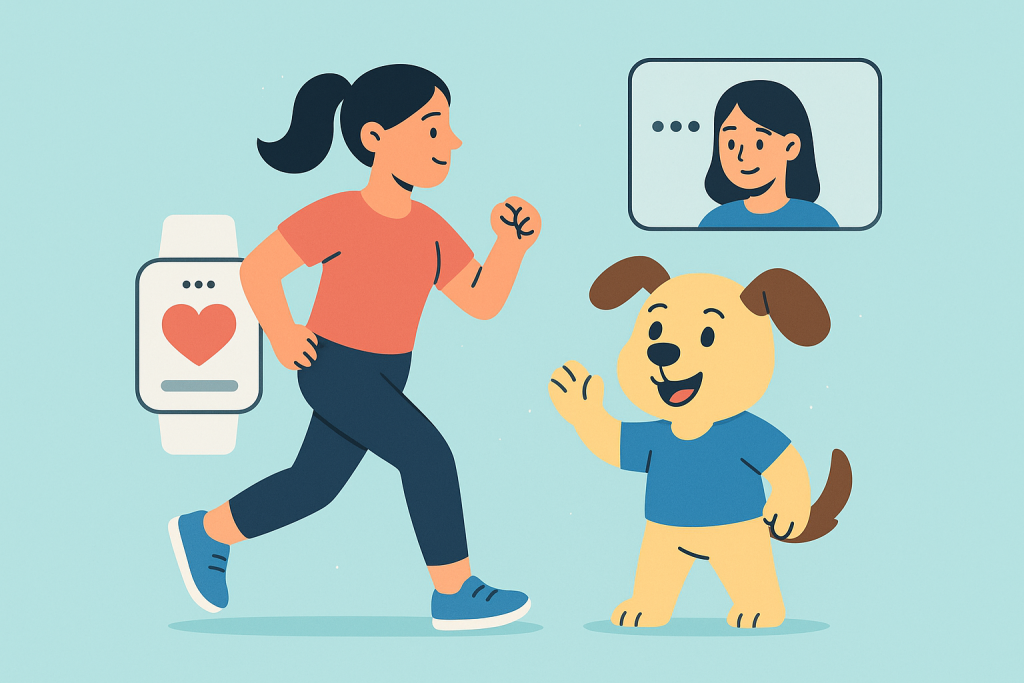
Traditional fitness apps rely on gamification — points, badges, streaks. It works for a while, but it’s transactional. Virtual human-pet characters change this dynamic by offering something deeper: an emotional bond. Whether it’s a playful AI dog that “cheers” when you jog or a humanoid fitness buddy that “misses you” when you skip a session, these avatars humanize the digital workout experience.
The psychology is powerful: humans are wired to respond to care and companionship. When users feel that their virtual pet depends on them — or grows happier as they move — their motivation shifts from obligation to empathy. They exercise not just for themselves, but for their digital friend.
2. The Human-Pet Hybrid: A New Form of Relational Design
Unlike traditional virtual trainers who instruct, human-pet avatars interact. They blend the nurturing warmth of a pet with the relatable guidance of a human. For example, a virtual cat might stretch alongside you while a human avatar explains proper posture. The combination appeals to both emotional and rational motivation — affection meets accountability.
This fusion of species and personality is no accident; it’s behavioral design. It softens the “discipline” of fitness and replaces it with companionship, transforming solitary routines into shared experiences.
3. Data With a Heartbeat: Personalized Empathy
Modern virtual characters are powered by emotion-aware AI. They learn user moods, adapt dialogue tone, and even mirror facial expressions through AR or holographic interfaces. Instead of a cold data chart, users see their pet-friend reacting to their progress — tail wagging, smiling, or offering comforting gestures on tough days.
This emotional feedback loop creates what psychologists call “parasocial empathy” — a one-sided relationship that still triggers real feelings of care and responsibility. It’s fitness by feeling, not by force.
4. From Play to Habit: How Attachment Shapes Consistency
Studies in behavioral science show that habits stick better when paired with emotional rewards. Virtual human-pet companions deliver exactly that — an evolving, responsive presence that grows as the user does. Each workout becomes part of a story: the avatar levels up, unlocks new expressions, or “evolves” into stronger forms, mirroring the user’s own physical growth.
Over time, the exercise habit is no longer just physical repetition; it’s a shared narrative of progress and friendship.
5. The Future of Fitness Companionship
In the next wave of digital wellness, fitness will be less about tracking and more about bonding. The emotional intelligence of virtual pets and human-like avatars can transform health technology from mechanical to meaningful. Imagine a world where skipping a workout feels like disappointing a friend — and finishing one feels like a shared victory.
The effect of virtual human-pet characters is not just about building muscle, but about building attachment — emotional ecosystems that turn routine exercise into relational joy.
Because when fitness becomes friendship, consistency becomes natural.