
Building a dog exercise playground from PVC pipes is one of the most practical and affordable DIY projects for pet owners. It not only saves money but also allows you to customize every detail according to your dog’s breed, size, and personality. PVC pipes are lightweight, waterproof, and easy to assemble, making them perfect for both indoor and outdoor playgrounds. This guide will walk you step by step through planning, materials, construction, and safety considerations for a complete DIY dog exercise park.
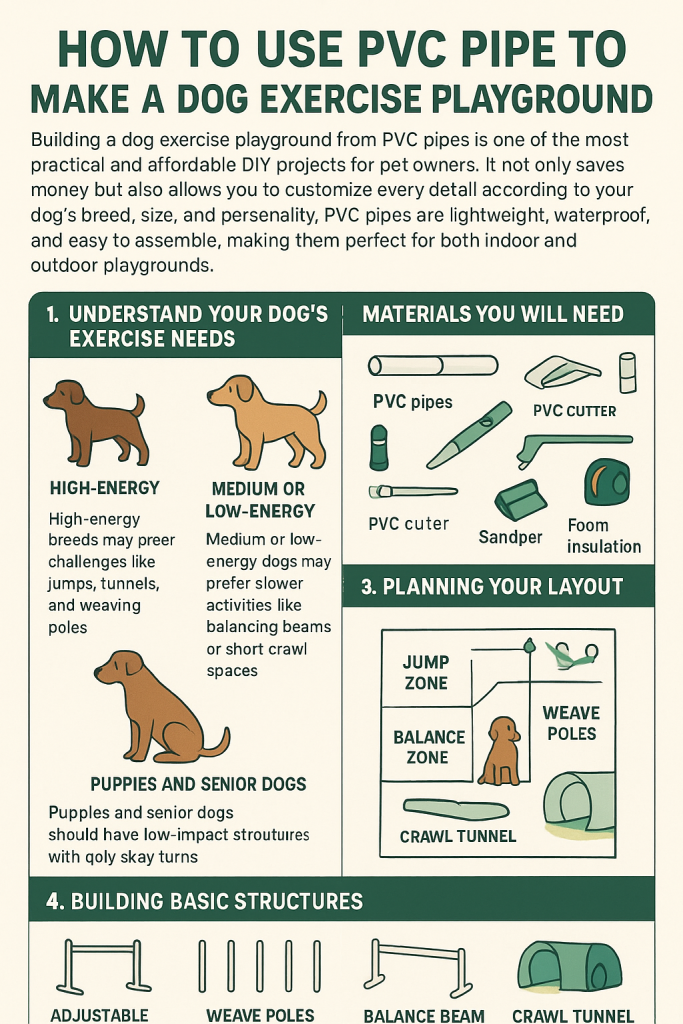
1. Understand Your Dog’s Exercise Needs
Before you start cutting pipes or sketching designs, take a moment to observe your dog’s energy level, agility, and preferences.
- High-energy breeds such as Border Collies, Huskies, or Jack Russell Terriers need challenges like jumps, tunnels, and weaving poles.
- Medium or low-energy dogs such as Bulldogs or Pugs may prefer slower activities such as balancing beams or short crawl spaces.
- Puppies and senior dogs should have low-impact structures, with soft ground surfaces and wide turns to protect their joints.
Understanding your dog’s personality helps you design a playground that’s engaging, not overwhelming.
2. Materials You Will Need
Most of the materials can be found at any hardware store or even leftover from other home projects. Here’s what you’ll need:
- PVC pipes: ½ inch to 1 inch in diameter depending on dog size
- PVC connectors: T-joints, elbow joints (90°), cross joints
- Measuring tape and marker
- PVC cutter or hacksaw
- Sandpaper (for smoothing pipe edges)
- Drill and zip ties (for extra reinforcement)
- Optional: colored tape or spray paint for decoration, foam insulation for softening surfaces
PVC pipes are modular, meaning you can easily adjust height and angle without permanent glue. For outdoor installations, consider gluing joints with PVC cement for durability.
3. Planning Your Layout
A good dog exercise area includes a variety of obstacles to work different muscle groups and mental skills. You don’t need a large space; even a 3m × 3m area can fit a few fun components.
Think of your playground as having different zones:
- Jump Zone: builds strength and focus
- Weave Zone: improves coordination
- Balance Zone: enhances stability
- Tunnel or Crawl Zone: provides exploration and fun
- Rest Area: gives your dog space to calm down
Draw a simple layout on paper first. Place obstacles in a loop or path to encourage continuous movement.
4. Building Basic Structures
Here are four simple structures you can build using only PVC pipes and connectors.
1. Adjustable Jump Bar
- Cut two vertical pipes (about 60–100 cm depending on dog size) and two horizontal bases for stability.
- Use T-connectors to attach the base to the vertical pipes.
- Slide a horizontal jump bar between the vertical pipes using clips or additional T-connectors.
- Adjust height easily by moving the bar up or down.
This jump is excellent for developing strength and focus.
2. Weave Poles
- Cut six to eight PVC pipes to about 80–100 cm each.
- Attach each pipe to a small base or drive them into the ground in a straight line.
- Space them 50–60 cm apart for medium dogs, less for small breeds.
- Use colored tape to make them visible.
Weave poles challenge your dog’s agility and precision.
3. Balance Beam
- Use a long PVC pipe (1.5–2 m) for the main beam.
- Create two supporting stands with cross joints or short vertical pipes.
- Cover the top with anti-slip tape or foam wrap.
- Keep it low for beginners or small dogs.
Balancing exercises help improve posture and body awareness.
4. Crawl Tunnel
- Create a circular frame using flexible PVC pipes bent into arches.
- Connect them with horizontal PVC rods to hold shape.
- Cover with a lightweight fabric or mesh.
- Make sure the tunnel is wide enough for your dog to pass comfortably.
Crawl tunnels are great for confidence-building and mental stimulation.
5. Safety Tips
Safety should always be the top priority.
- Smooth all edges: After cutting, sand every pipe end carefully.
- Secure connections: Make sure joints are tight and stable; use zip ties or cement if needed.
- Non-slip surfaces: Add rubber mats or grass underneath to prevent slipping.
- Check height and spacing: Ensure everything matches your dog’s physical ability.
- Supervision: Never leave dogs unsupervised during the first few sessions.
6. Adding Variety and Creativity
Once you have the basic structures, you can expand your playground in creative ways:
- Add a hoop jump by attaching a circular PVC ring to a simple frame.
- Build a zigzag ramp by connecting two beams with adjustable angles.
- Include a “pause table”—a low square platform for your dog to sit or lie down between activities.
- For mental enrichment, hang soft toys or treat dispensers near obstacles to encourage exploration.
You can also introduce color coding: blue pipes for balance, yellow for jumps, red for rest. This adds visual clarity and style to your playground.
7. Maintenance and Weatherproofing
PVC structures can last for years if maintained properly.
- Wipe them regularly with mild soap and water.
- For outdoor playgrounds, store them indoors during storms or snow.
- Repaint or rewrap pipes if colors fade.
- Check weekly for loose joints or cracks.
If you live in a hot climate, avoid leaving PVC directly under the sun for long periods—UV rays can weaken it. Applying a layer of UV-resistant spray helps prolong its life.
8. Training and Play Tips
When introducing your dog to the playground, start slow.
- Use treats or toys to encourage exploration.
- Never force your dog over an obstacle.
- Celebrate small progress—every jump, crawl, or weave deserves praise.
- Mix in short sessions (10–15 minutes) several times a week instead of one long workout.
Dogs learn through repetition and positive reinforcement. Over time, they’ll build confidence and agility while enjoying every session.
9. Budget and Cost Estimate
One of the best parts of using PVC pipes is affordability.
- A small playground can be built for under $50–$80.
- A larger, multi-zone course may cost $120–$150 depending on accessories.
Most costs come from the pipes and connectors; tools are reusable for future projects.
10. The Joy of DIY Pet Playgrounds
Beyond saving money, this project carries emotional and creative rewards. You’re not just building a playground—you’re building a stronger bond. Every jump your dog clears and every tunnel they conquer reflects your care and effort. Plus, it’s eco-friendly: PVC pipes are reusable and can be reconfigured endlessly.
Creating a dog exercise playground from PVC is more than a weekend project. It’s a way to transform ordinary materials into a world of movement, learning, and joy for your pet. Once you start, you might find yourself designing more complex features, decorating them with colors, or even sharing the experience with friends and their dogs.
With just some imagination, basic tools, and a pile of PVC pipes, you can give your furry friend the adventure park they deserve—right in your own backyard.