
For centuries, human–animal relationships were simple — a dog guarded the yard, a cat chased mice, and both offered affection in return for food and care. But in the 21st century, this quiet companionship has evolved into something profoundly different. We are witnessing a revolution in how we connect, communicate, and even co-exist with our pets — one shaped not just by emotion, but by technology, psychology, and design.
1. From Ownership to Partnership
The word pet owner is slowly fading from modern vocabulary, replaced by pet parent or guardian. This linguistic shift signals something deeper: we no longer see pets as property but as partners in emotional well-being.
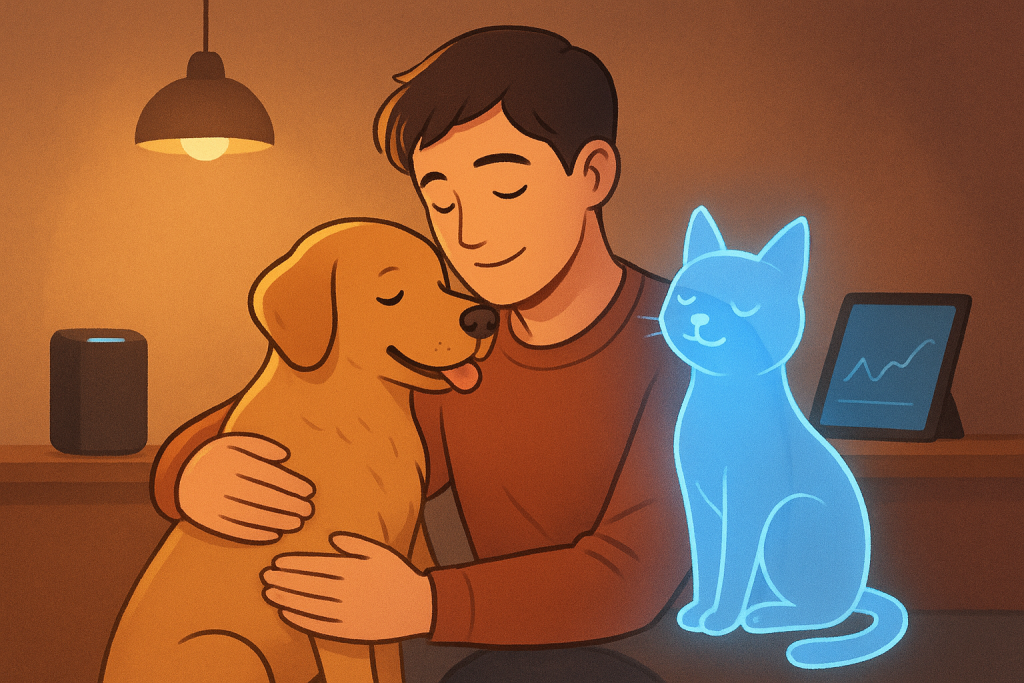
They share our homes, our schedules, and even our digital lives. Smart feeders notify us when our cats eat less than usual; GPS collars let us track a dog’s walk in real time; and AI-driven pet cameras let us talk to them when we’re away.
In this new ecosystem, pets are not accessories — they are cohabitants in a shared emotional economy.
2. The Rise of Digital Companions
Not every “pet” today has fur. Virtual pets — from AI-driven robot dogs to holographic cats — are rewriting the definition of companionship. These creations don’t shed, don’t age, and never fall ill, yet they can respond to human emotions through sensors and algorithms.
In Japan, elderly residents living alone often adopt robotic pets to reduce loneliness. For children with allergies or disabilities, digital companions become emotional bridges, teaching empathy without risk.
What once sounded like science fiction has quietly entered our living rooms — a companionship built from code and care.
3. Emotional Intelligence Meets Artificial Intelligence
The latest frontier is emotion-responsive technology. Devices that can sense a pet’s mood through micro-movements, vocal tones, or tail position are under development. Imagine a world where your smartwatch syncs with your cat’s collar, alerting you when it’s anxious or unwell.
Likewise, AI learning models can help interpret animal behavior patterns and even translate barks or meows into data-driven emotional cues. The goal is not to replace intuition, but to augment empathy — to help us understand our companions better than ever before.
4. The Minimalist Pet Lifestyle
Urban life has given birth to “micro-pet culture” — smaller species like geckos, axolotls, or even virtual fish tanks for tiny apartments. Pet cafés, shared adoption programs, and pet co-living spaces allow people to experience companionship without permanent commitment.
This shift mirrors a larger social trend: connection over possession. The future of companionship may not be about owning a pet, but about sharing emotional experiences — responsibly, sustainably, and mindfully.
5. Beyond the Revolution: Back to the Heart
Despite all these innovations, one truth remains timeless: pets teach us how to love without conditions.
No algorithm can replicate the quiet warmth of a cat curling up beside you, or the tail-wagging joy of a dog greeting you at the door.
The revolution in pet companionship isn’t about replacing touch with tech — it’s about using innovation to deepen our empathy. Because whether it’s a robot puppy or a rescue cat, the need behind it is the same: a heartbeat seeking another heartbeat.