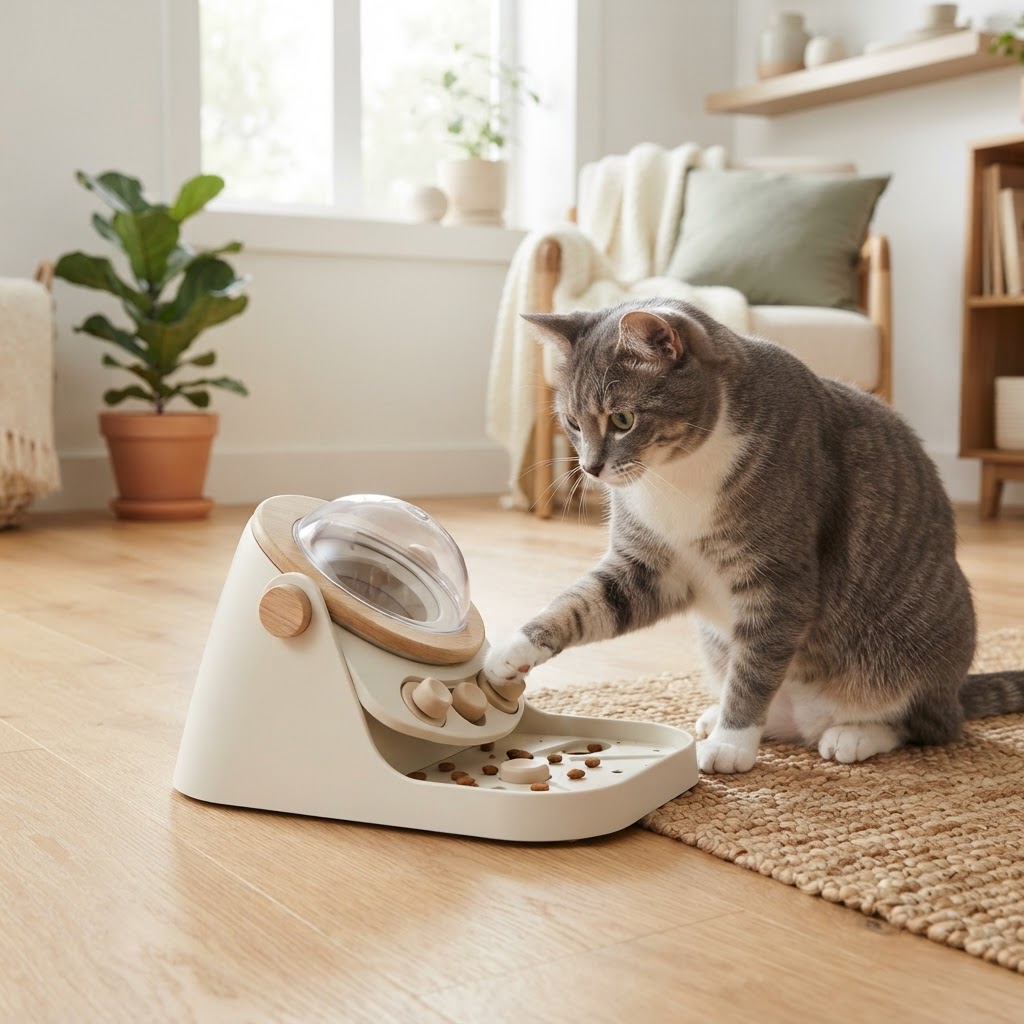
Many indoor cats enjoy activities that invite them to sniff, paw and explore. A puzzle feeder can make part of the daily routine more interactive while giving curious cats a new object to investigate.
Make the first session easy
Begin with a small amount of your cat’s familiar dry food or treats, if the product instructions allow it. Let your cat watch you place the food and leave the puzzle in a quiet, familiar space. Avoid making the first challenge too difficult.
Choose for your cat
Check the feeder’s size, moving parts, material and cleaning instructions. Think about your cat’s age, confidence and eating habits. Some cats prefer a simple tray, while others enjoy moving components. Always supervise initial use and stop if your cat seems stressed or starts chewing the feeder.
Keep food and play comfortable
Use a portion of your cat’s normal daily food rather than adding extra treats. Keep fresh water nearby and clean the feeder as directed. A puzzle feeder should complement your cat’s normal feeding routine, not replace veterinary guidance or a balanced diet.
Try a gentle rotation
Once your cat is comfortable, offer the puzzle occasionally alongside other toys and play. Put it away between sessions if the cat loses interest or if the product is being used in an unsafe way.
See the PETWK cat puzzle slow feeder and review its product details before use.