
When people think of blood donation, they often picture humans rolling up their sleeves in sterile hospital rooms. Few realize that animals, too, have their own silent network of heroes — pet blood donors — whose generosity saves thousands of furry lives each year. Welcome to the unseen yet vital world of pet blood banks, where compassion flows vein to vein.
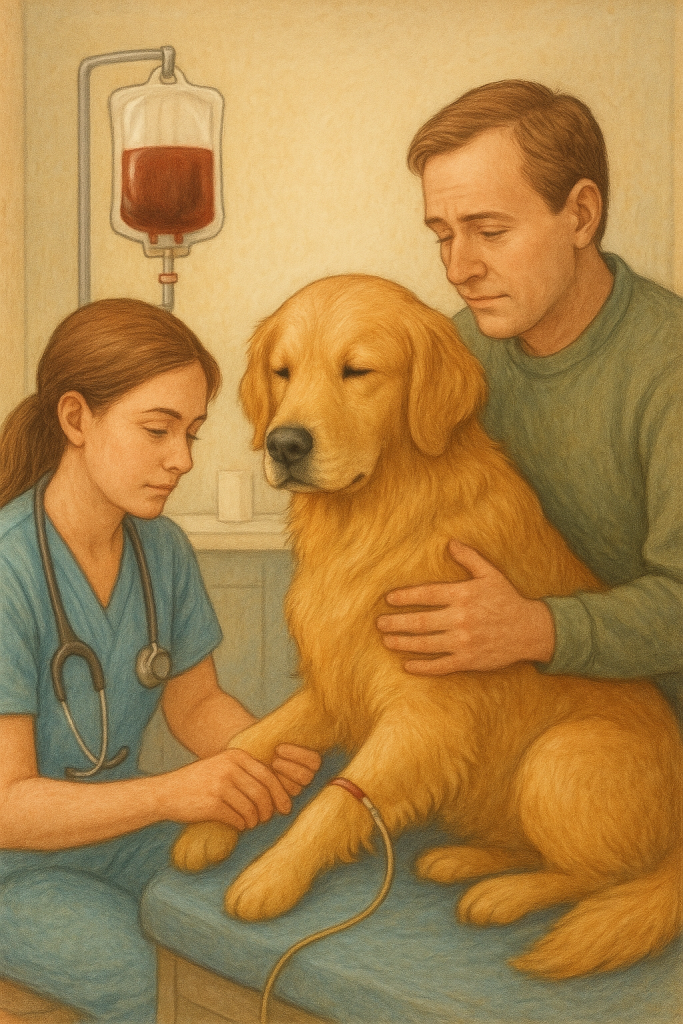
1. Why Pets Need Blood Too
Just like humans, pets can face medical emergencies that require blood transfusions — car accidents, surgeries, poisoning, or diseases that damage blood cells.
A single transfusion can mean the difference between life and death for a cat with severe anemia or a dog recovering from surgery.
However, sourcing safe, compatible blood is a race against time. Unlike humans, pet blood cannot be stored indefinitely — dog blood lasts about a month refrigerated, cat blood even less. This makes the establishment of pet blood banks not just a medical convenience, but a moral necessity.
2. How a Pet Blood Bank Works
In these specialized facilities, healthy donor animals — often volunteer pets — undergo thorough screening to ensure they are disease-free and emotionally comfortable with handling.
Dogs usually donate around 400 ml at a time, cats about 50 ml, under strict veterinary supervision.
After collection, the blood is separated into components:
- Red cells for anemia and surgery recovery,
- Plasma for clotting disorders,
- Platelets for specific immune diseases.
Each donation can help multiple patients, multiplying the gift of life.
3. The Ethical Dimension
The concept of pet blood banking raises moral questions. In some regions, donor animals are kept permanently in facilities — a practice now widely criticized. The more humane and growing trend is voluntary donation, where family pets come in to donate periodically, much like human donors.
This model not only protects animal welfare but also deepens the emotional bond between owners and their pets. There’s a quiet pride in knowing your dog’s blood may one day save another dog’s life.
4. The Future: Compassion Meets Technology
Pet blood banks are evolving fast. Some now use genetic typing to improve compatibility and reduce reaction risks. Others are developing synthetic plasma substitutes and frozen blood storage technologies to extend shelf life.
There’s even talk of regional blood-sharing networks — a “Red Cross for pets” — where clinics collaborate to ensure no animal dies for lack of blood.
5. A Call to Empathy
Perhaps what pet blood banks remind us most is this: empathy isn’t limited by species. When a Labrador donates blood for a stranger’s cat, or a cat’s plasma saves a police dog injured in service, we glimpse a shared ecosystem of care — fragile, interdependent, and profoundly human.
Because in the end, the heartbeat that saves another heartbeat is the purest form of kindness.