
In today’s design world, a growing number of homeowners are moving beyond the usual minimalism or industrial chic. Instead, they’re embracing a cozier, livelier concept — pet-inspired home decor. This isn’t about scattering dog portraits or paw-print pillows everywhere; it’s about blending aesthetic sophistication with a deep understanding of how pets shape our daily lives and emotional spaces.
1. From Function to Emotion: The Rise of “Co-Living Design”
Traditional interior design focused on human comfort alone — ergonomic chairs, lighting balance, visual harmony. But modern homes are increasingly shared ecosystems, where cats claim the sofa as their kingdom and dogs patrol the living room like loyal sentinels. Designers now speak of “co-living design”, a philosophy that integrates animal behavior into spatial planning. For example, sofa fabrics are chosen not just for color, but for scratch resistance and fur invisibility. Furniture heights are designed for both human and four-legged accessibility.
2. Materials that Matter: The Science of Pet-Safe Aesthetics
Pet-inspired decor begins with safe materials. Many conventional paints, adhesives, and textiles release volatile compounds harmful to small lungs and sensitive noses. The latest wave of eco-pet design embraces plant-based varnishes, natural latex cushions, and bamboo composites that reduce allergens while maintaining style. A new favorite among designers? Microfiber velvet — soft enough for naps, tough enough for claws, and easy to clean after muddy adventures.
3. Design that Tells a Story
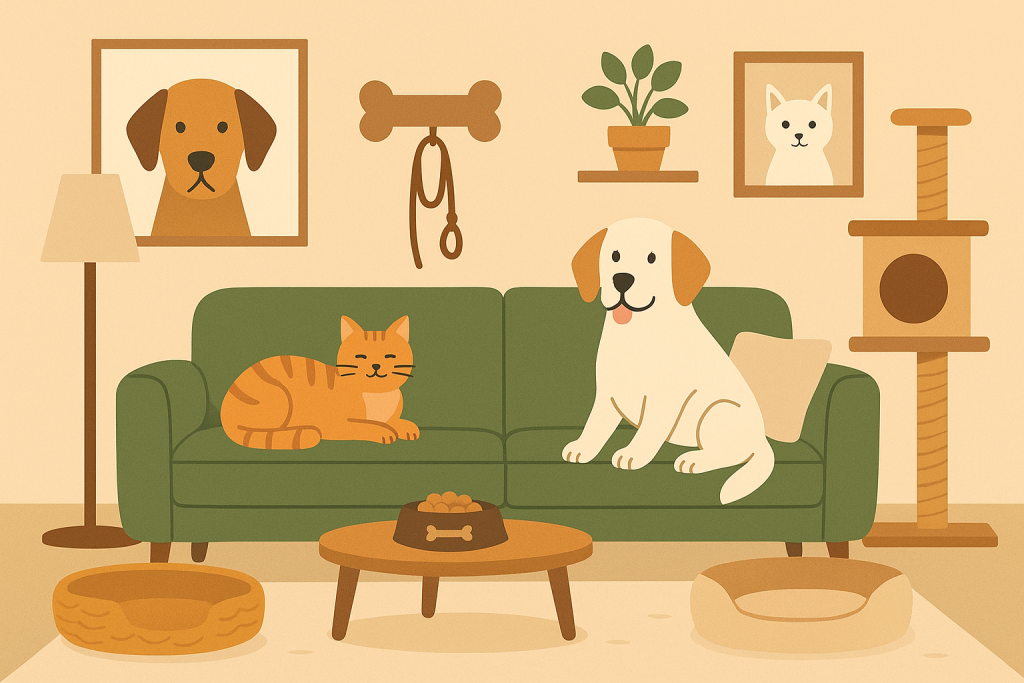
A truly modern pet-inspired home doesn’t just accommodate animals; it celebrates them. A dog’s leash becomes wall art when hung on a sculptural hook; a cat’s climbing frame transforms into a minimalist installation piece. Some families even commission custom murals featuring their pets in surrealist or pop-art styles — turning living rooms into emotional galleries. In essence, decor becomes biography: every corner whispers a story of companionship.
4. The Psychology of Shared Space
Studies in environmental psychology show that pets influence not just how we decorate, but how we feel about space itself. A home that visibly reflects our relationship with our animals tends to feel warmer, more “alive.” People report reduced stress and greater satisfaction when their decor reinforces bonds — like having an indoor “cat bridge” that doubles as visual sculpture, or a window hammock positioned to share sunlight between human and pet.
5. Toward the Future: The Pet-Integrated Smart Home
Next-generation pet decor merges technology and empathy. Smart feeders blend seamlessly into cabinetry. Temperature-sensitive pet mats adjust warmth automatically. Even robotic vacuums are being designed to avoid pet tails and toys — proof that pet-conscious design is evolving from a niche trend into mainstream architecture.
In short, pet-inspired home decor is not about cute gimmicks — it’s a cultural statement. It represents an era where comfort, design, and compassion coexist. Our homes are no longer just reflections of who we are — they are shared habitats of every being we love, fur and all.