
In a world obsessed with pet comfort, we’ve built an empire of soft beds, gourmet treats, and smart collars — yet few of us stop to wonder: are our pets truly happy, or just well-decorated?
The new frontier of animal care isn’t physical health, but mental resilience. Behind every wagging tail or purring cat may hide silent anxiety, boredom, or even depression — symptoms of a world where pets live longer, smarter, but lonelier lives.
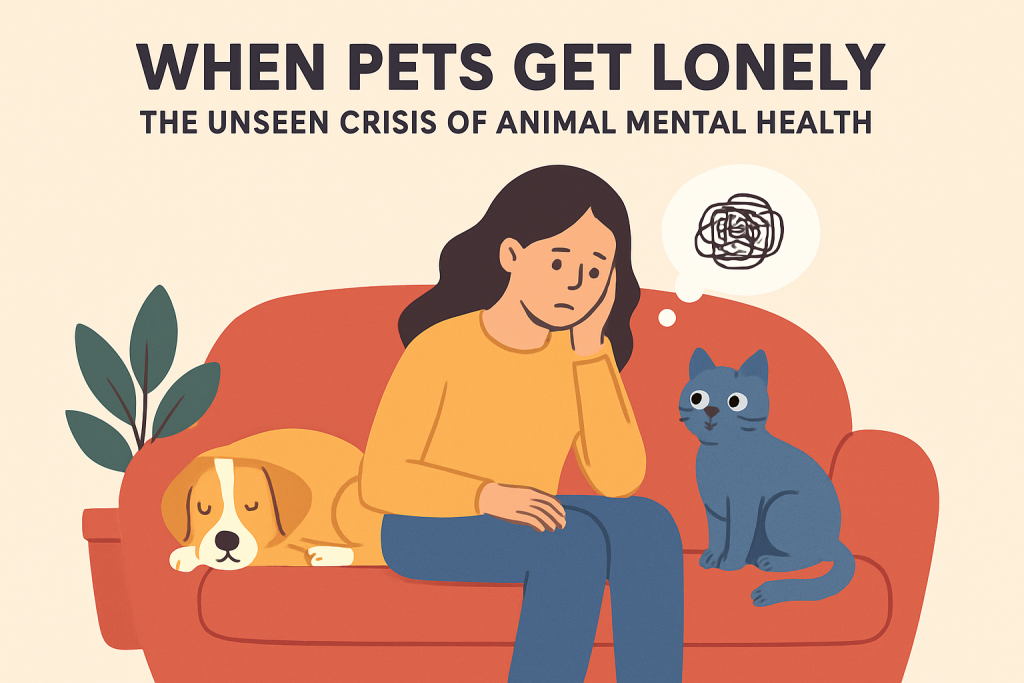
1. The Paradox of the Modern Pet
Once upon a time, dogs worked beside shepherds, cats roamed fields, parrots talked to flocks. Today, they live in apartments with Wi-Fi, climate control, and endless solitude. They no longer chase sheep — they chase the sound of your keys jingling.
This is the paradox of progress: the more comfortable we make their lives, the less purpose they may feel. And in animals as in humans, purpose is medicine.
2. Invisible Disorders
Veterinary psychologists are now identifying patterns that look uncannily human:
- Canine depression after relocation or loss of a companion
- Separation anxiety when owners return to office life post-pandemic
- Feline frustration from overstimulation without escape spaces
- Parrot self-plucking, a behavioral equivalent of self-harm
These are not “spoiled pet” problems — they are psychosocial fractures in the human-animal bond.
3. The Mirror Effect
What’s fascinating is that pets don’t just mirror our routines — they mirror our moods.
A stressed human creates a stressed dog.
A lonely owner raises a clingy cat.
A chaotic household breeds anxious pets.
Modern studies using AI emotion tracking in pets reveal a striking truth: when a person’s emotional tone changes, their animal’s stress hormones respond within hours. Our mental health isn’t isolated; it’s co-regulated across species.
In this sense, pet mental health is no longer a “subset” of veterinary science — it’s part of family psychology.
4. The New Wellness Toolkit
The future of pet wellness isn’t just about better food — it’s about mental enrichment:
- Sensory architecture: homes with scent exploration and visual variety
- AI-driven toys: not random movement, but interactive emotional engagement
- Therapeutic music and scent diffusers: proven to reduce cortisol in anxious dogs
- Mindful walks: not miles for fitness, but moments for curiosity
5. Beyond Comfort: Toward Emotional Equality
When we start treating pets as emotional beings rather than property, we open a door to a deeper kind of companionship. Caring for a pet’s mind is not about pampering — it’s about respecting consciousness beyond species lines.
Pet mental health, then, is not a sentimental issue. It is the next ethical frontier in how humanity defines love, responsibility, and empathy in a shared world.